On a weekday afternoon, a young person walks into La Vida Project for the third time that week. They are not there because they were assigned a mentor. They are not enrolled in a program.
They are there because someone remembers their name. Because there are classes and socials available to them. Because it is a gender-affirming space, a space that feels safe enough to exhale.
This is often where mentorship at Families & Youth Innovation Plus (FYI+) begins.
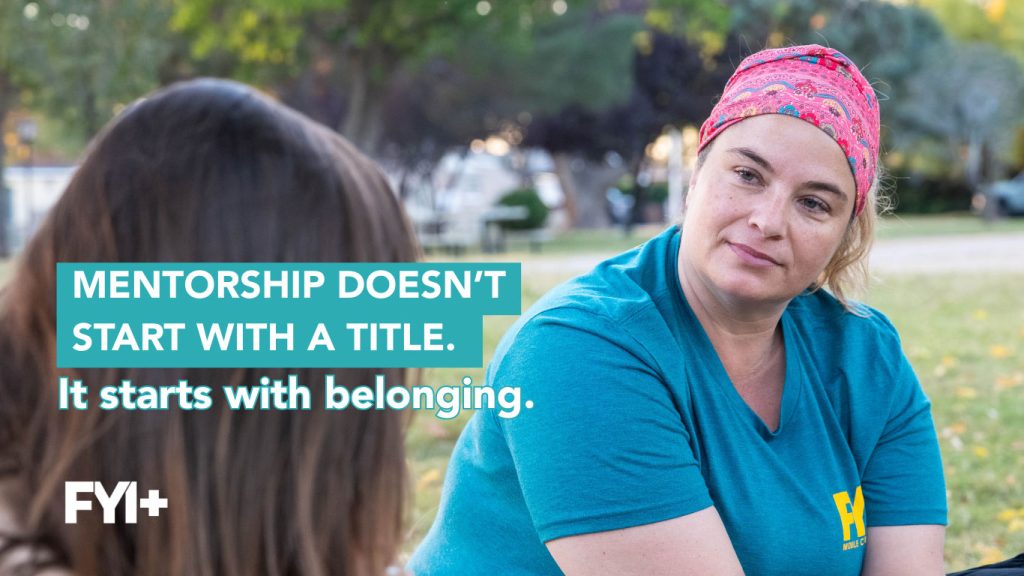
Not with a title.
Not with a role.
But with a sense of belonging.
Mentorship Begins Before It’s Named
During National Mentorship Month, mentorship is often described through traditional models: one mentor, one mentee, structured goals, and scheduled check-ins. While those models can be meaningful, they do not always reflect the realities many youth face, especially those navigating complex systems, identity exploration, or inconsistent access to support.
Research consistently shows that having even one trusted adult in a young person’s life is associated with better mental health outcomes, stronger resilience, and increased engagement in school and community life.
At FYI+, we start there.
Mentorship begins in everyday moments. It shows up through a weekly art class, creating something side by side, returning to the same space week after week, and being welcomed without judgment or expectation.
These moments do not look extraordinary, but they are where trust forms. Trust is where mentorship grows.
Where Mentorship Is Born: La Vida Project
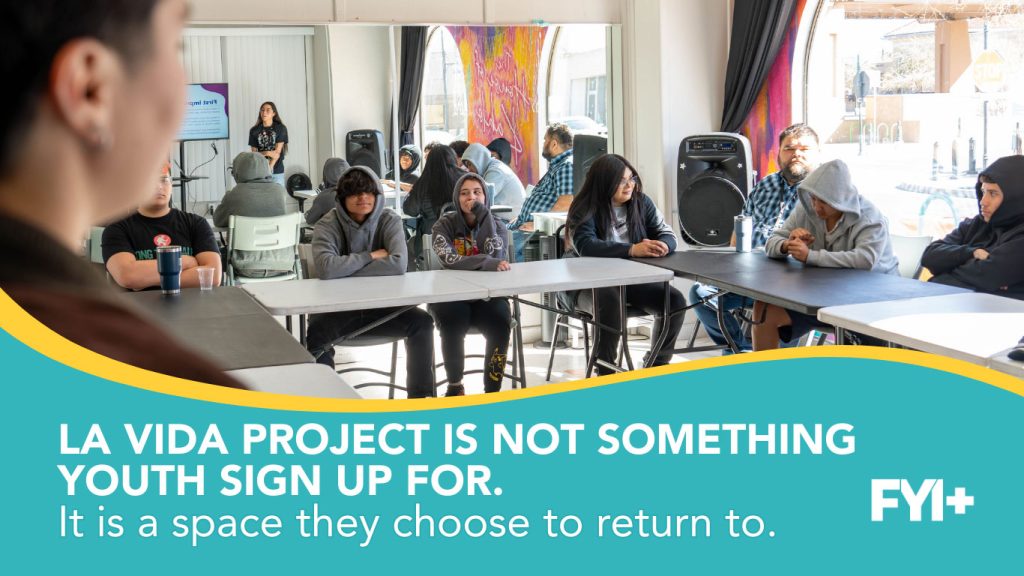
For many youth, their first mentorship relationships at FYI+ begin at La Vida Project, a drop-in space centered on connection, creativity, and cultural affirmation.
La Vida Project is not something for which youth sign up. It is a space they choose to return. This happens through providing weekly classes, study hours, monthly socials, and a space for youth to be their authentic selves.
This approach matters, especially when access to traditional mentorship is limited. Nationally, fewer than one in three young people report having access to formal mentorship programs, and access drops even further for youth navigating multiple systems or living in rural communities.
Staff do not show up as authority figures with answers. They show up as consistent, caring adults who listen, notice, and walk alongside youth at their own pace.
Often, these are the first mentorship moments, long before leadership titles or structured opportunities are introduced.
A Continuum That Allows Relationships to Grow
From Clinical Support to Holistic Practices, FYI+ operates through a Continuum of Care made up of Resources, Supports, and Services. Mentorship is not confined to one level. It is woven throughout.
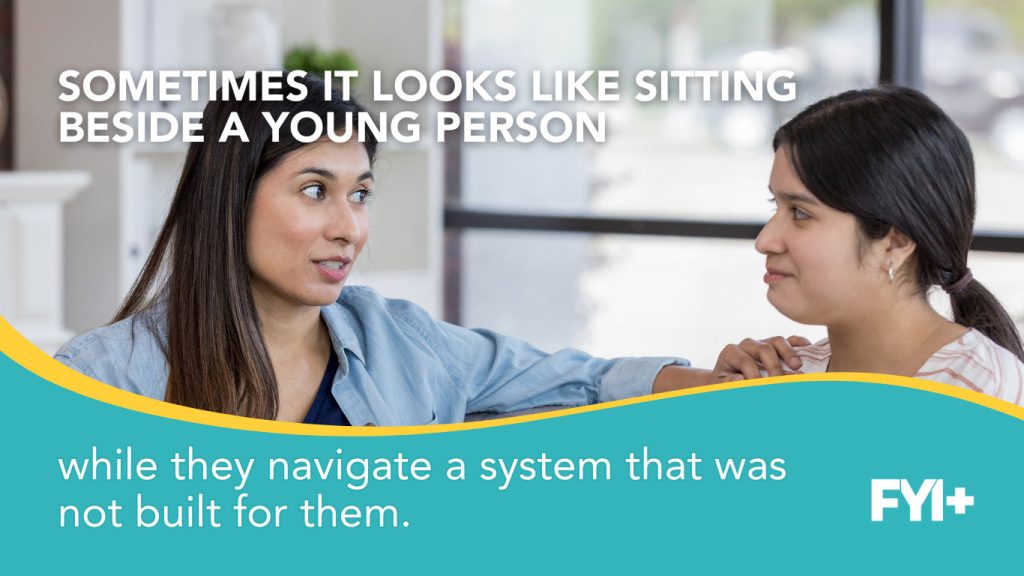
Sometimes mentorship looks like learning how to cook a meal together. Sometimes it looks like helping someone find their voice in confusing systems like foster care or juvenile justice. Sometimes it looks like sitting beside a young person while they navigate a system that was not built for them.
There are mentorship opportunities naturally embedded in so many of the programs at FYI+, including but not limited to, outpatient therapy, transitional living for youth & young adults, Comprehensive Community Support Services (CCSS), school-based services, and more. Specifically, our Wraparound team compliments our clinical services because it takes a holistic approach in care that addresses systems and supports that youth need. Wraparound Facilitators integrate themselves into the families of the participants that they serve to better understand their unique needs.
This flexibility is especially important in rural and border communities like those in Doña Ana County, where youth often face barriers to behavioral health services such as transportation challenges, provider shortages, and stigma.
By embedding mentorship across informal and formal spaces, FYI+ reduces barriers and allows youth to engage on their own terms.
Mentorship Without Hierarchy: The Participant Impact Team (PIT)
The FYI+ Participant Impact Team aims to bring together youth with lived experience as paid co-designers, shaping youth peer support models and influencing real decisions. Youth are not asked to share their stories just for inspiration. They are trusted to shape outcomes.
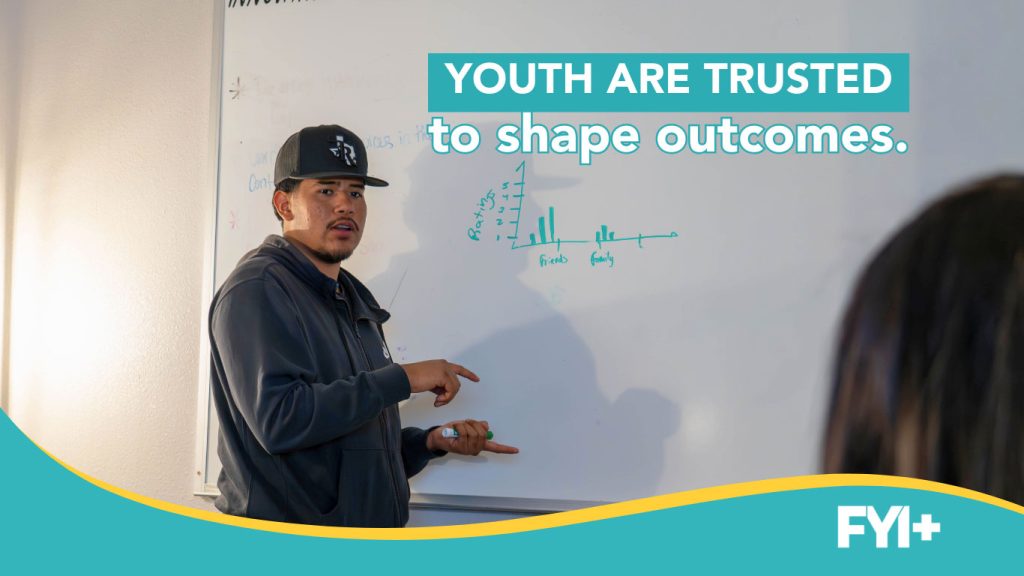
Research supports this approach. When youth are meaningfully involved in shared decision-making, engagement increases, self-agency strengthens, and trust in systems improves.
In these spaces, youth mentor adults by sharing lived experience and insight. Staff mentor youth by supporting facilitation and systems navigation. Peers mentor one another through collaboration.
There is no single mentor in the room. There is shared responsibility and participation.
Why This Approach Matters Here
In New Mexico, youth face some of the highest rates of mental health challenges in the country, including anxiety, depression, and suicide risk. These challenges are compounded for youth navigating poverty, marginalization, or system involvement.
FYI+ responds by prioritizing connection and consistency. Systems alone do not heal people. Relationships do.
By embedding mentorship in spaces rooted in dignity and belonging, FYI+ supports youth in building confidence and self-agency, strengthening social and community connections, developing leadership and life skills, and imagining futures grounded in possibility.
Mentorship does not happen in isolation. It happens in the community.
Mentorship as a Shared Responsibility
At FYI+, mentorship is not owned by a single role or program. It is a shared responsibility across staff, partners, families, and the broader Doña Ana County community.
Mentorship at FYI+ does not end when a meeting does. It continues in shared meals, familiar faces, and young people who know they are trusted, not someday, but now.
Mentorship is not assigned.
It is built together.
For more information about our resources, supports, and services, visit our website at fyiplusnm.org or call (575) 522-4004. If you are experiencing a mental health crisis call/text 988 anytime. If an on-site response is needed, our Mobile Crisis Team will be sent out to you. For all other emergencies, call 911.
References
Centers for Disease Control and Prevention. (2023). Youth Risk Behavior Surveillance System (YRBSS): New Mexico.
https://www.cdc.gov/healthyyouth/data/yrbs/index.htm
Health Resources & Services Administration. (2022). Rural health disparities.
https://www.ruralhealthinfo.org/topics/rural-health-disparities
MENTOR: The National Mentoring Partnership. (2023). Mentoring impact and opportunity.
https://www.mentoring.org/mentoring-impact/
Search Institute. (2017). The developmental relationships framework.
https://www.search-institute.org/developmental-relationships/