Think about the last time someone in your family needed a little extra help. Maybe they needed a ride to a doctor’s appointment, someone to pick up their prescriptions, or simply a familiar voice to reassure them during a difficult day.
Now think about the person who made that happen.
Chances are, they were juggling a few other things, too.
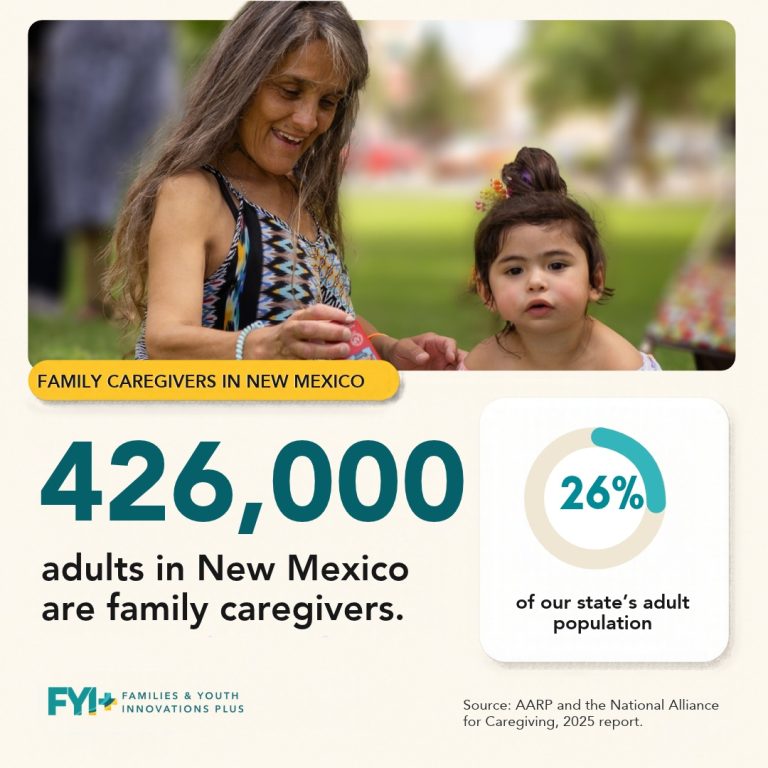
According to AARP and the National Alliance for Caregiving’s 2025 report, approximately 426,000 adults in New Mexico are family caregivers. That’s 26% of our state’s adult population.
That’s more than one in four New Mexico adults providing ongoing care to a loved one, friend, or neighbor with a disability or complex medical condition.
We may notice what caregivers do, but we don’t always see everything that goes into it.
November is National Family Caregivers Month, a time to recognize the people who dedicate so much of themselves to caring for others. At FYI+, we’re taking this opportunity to look a little closer at what family caregiving really means and how we can better support the people who do it.
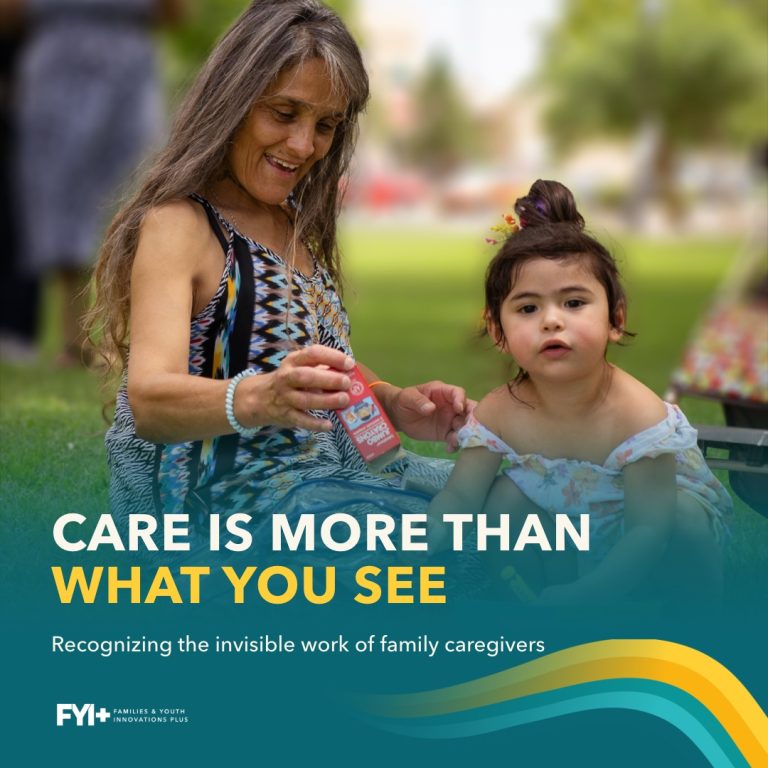
Because care is more than what you see.
What Does Family Caregiving Really Look Like?
When you hear the word “caregiver,” who comes to mind?
Maybe you picture someone caring for an aging parent or a spouse helping their partner recover from an illness. Those are certainly caregivers, but the reality is that caregiving looks different for every family.
It might be a parent helping their child navigate a disability, a sibling supporting a loved one through mental health challenges, or a grandparent stepping in to care for a family member with ongoing medical needs.
And sometimes, people don’t even realize they’re caregivers. They’re simply doing what they can to help someone they love.
Family caregiving can mean helping with everyday activities like getting dressed, preparing meals, or getting around the house. It can also mean managing medications, scheduling appointments, navigating healthcare systems, or advocating for a loved one’s needs.
At other times, caregiving looks like sitting beside someone during a difficult conversation, offering encouragement after a setback, or making sure they don’t feel alone.
There’s no single way to be a caregiver, and there’s no one-size-fits-all experience.
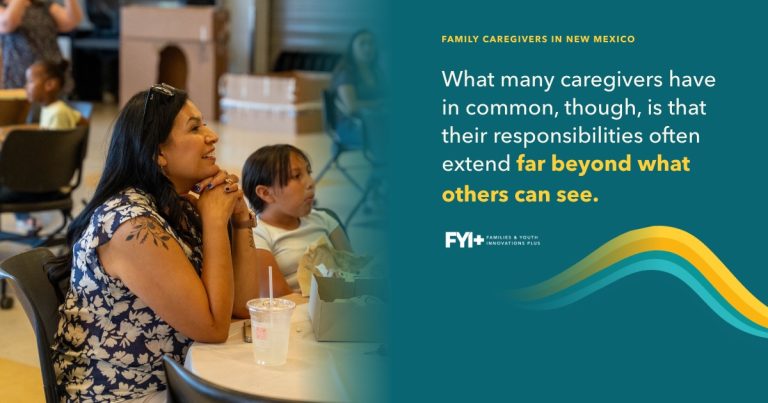
What many caregivers have in common, though, is that their responsibilities often extend far beyond what others can see.
The Things We Don't Always See
Imagine someone taking their mother to a doctor’s appointment.
From the outside, it might look like a simple ride across town. But what you don’t see is the time spent scheduling that appointment, arranging time away from work, gathering medical information, and making sure everything is ready before they leave the house.
According to an estimate cited by the New Mexico Aging and Long-Term Services Department in 2026, approximately 390,000 New Mexicans provide 340 million hours of unpaid care each year, representing an estimated $6.2 billion in economic value.
That’s hundreds of millions of hours spent helping loved ones navigate daily life, manage their health, and maintain their independence.
There’s also the emotional side of things. Caregivers may spend their days making decisions, anticipating needs, and worrying about the well-being of someone they love. Even when they’re not actively providing care, those responsibilities don’t necessarily disappear.
Some caregivers balance their responsibilities with full-time jobs. Others are raising children, attending school, or managing their own health needs. Many are doing several of these things at once.
It’s a lot to carry, especially when the people around them don’t realize just how much they’re managing.
That’s why recognizing the invisible work of caregiving matters. When we understand what someone is carrying, we’re better able to help lighten the load.
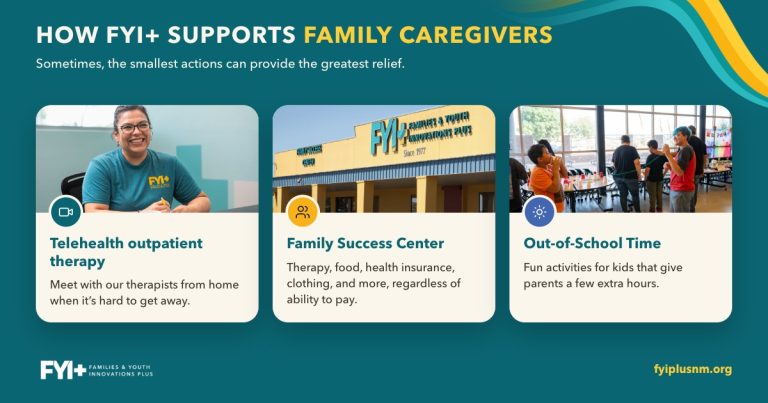
How FYI+ Supports Family Caregivers
You don’t need to make a grand gesture to make a difference in a caregiver’s life. Sometimes, the smallest actions can provide the greatest relief.
1. We offer Tele-health Outpatient Therapy
If it’s too difficult to leave the house or travel from work, we offer a way for caregivers to connect with our therapists from the comfort of their home.
2. Family Success Center
FYI+ provides a range of trauma-informed and affirming resources, supports, and services to all participants. Our team ensures parents, caregivers, and families can access what they need to thrive, regardless of their ability to pay. Whether families need connections to therapy, food assistance, health insurance, or childcare programs, we can assist. We also provide clothing and hygiene products for the community.
3. Out-of-School Time Program
Sometimes help is as simple as giving parents a few extra hours of their day while we take care of their children in our After School Program that offers engaging and educational activities. We also offer ways for caregivers to connect with their children by providing activities for everyone.
988 Suicide & Crisis Lifeline: Offers free, confidential support for people experiencing mental health or emotional distress. Call or text 988 to connect with a trained crisis counselor.
At FYI+, we believe strong communities are built when individuals and families have the support they need to thrive. That includes the people who spend so much of their time caring for others.
This National Family Caregivers Month, we encourage you to think about the caregivers in your life.
Maybe it’s your parent, your partner, your sibling, your friend, or someone you work with.
Take a moment to recognize what they do. Ask how they’re doing. Offer a helping hand when you can.
Because behind every appointment, every prepared meal, every late-night conversation, and every small act of care, there’s a person whose needs matter, too.
Care is more than what you see. Let’s give care back.